


Overcoming Fear in Roller Skating: A Step-by-Step Guide
Fear and roller skating go hand in hand, especially when you’re learning or pushing into something new. Wheels, speed, falling, trying things you’ve never done before. It makes sense that your brain gets a bit loud.
The key thing to know is this: fear is rational. Letting it control you is optional.
Here’s how I approach it.
Fear Is Normal
Roller skating can be an incredible feeling, but it can also feel intimidating. New skates, new surfaces, new tricks, all with the risk of falling. That fear isn’t weakness. It’s your brain trying to protect you.
The goal isn’t to get rid of fear. It’s to understand it and work with it.
Start Slower Than You Think You Should
A lot of fear comes from jumping ahead too fast. New skates and suddenly you’re thinking about ramps, spins, or park skating. If your heart rate spikes just thinking about it, that’s usually a sign you’ve skipped a few steps.
Slow things down. Focus on feeling balanced, relaxed, and in control. Progress at a pace that feels challenging but manageable. And try not to compare yourself to other skaters. Everyone’s timeline looks different, even if social media makes it seem otherwise.
Practice Falling on Purpose
This part surprises people, but it works.
Practicing falls builds confidence because it teaches your brain that falling is not the worst-case scenario. Each controlled fall shows your body what to do and proves that you can handle it.
If a surface, trick, or ramp scares you, try practicing safe falls there while wearing pads. Knee pads, wrist guards, helmet, controlled slides, rolling out when possible. When falling becomes familiar, it loses a lot of its power over you.
I talk more about this idea in my video below:
Gradually Raise the Bar
Fear usually shows up around specific things. Ramps, speed, jumps, slopes, new tricks. Instead of avoiding them, break them down.
If ramps scare you, start with small banks before moving to steeper ones.
If spins or jumps feel intimidating, practice the motion on flat ground or even in shoes.
If slopes make you nervous, begin with gentle declines and work your way up.
If stepping off edges feels scary, start with low curbs and slowly increase the height.
Progression does not mean rushing. It means building trust in your skills step by step.
Consistency Builds Confidence
This part isn’t exciting, but it matters.
The more consistently you skate, the more your body learns what to do without you overthinking it. Muscle memory kicks in. Reactions get quicker. Confidence builds quietly in the background.
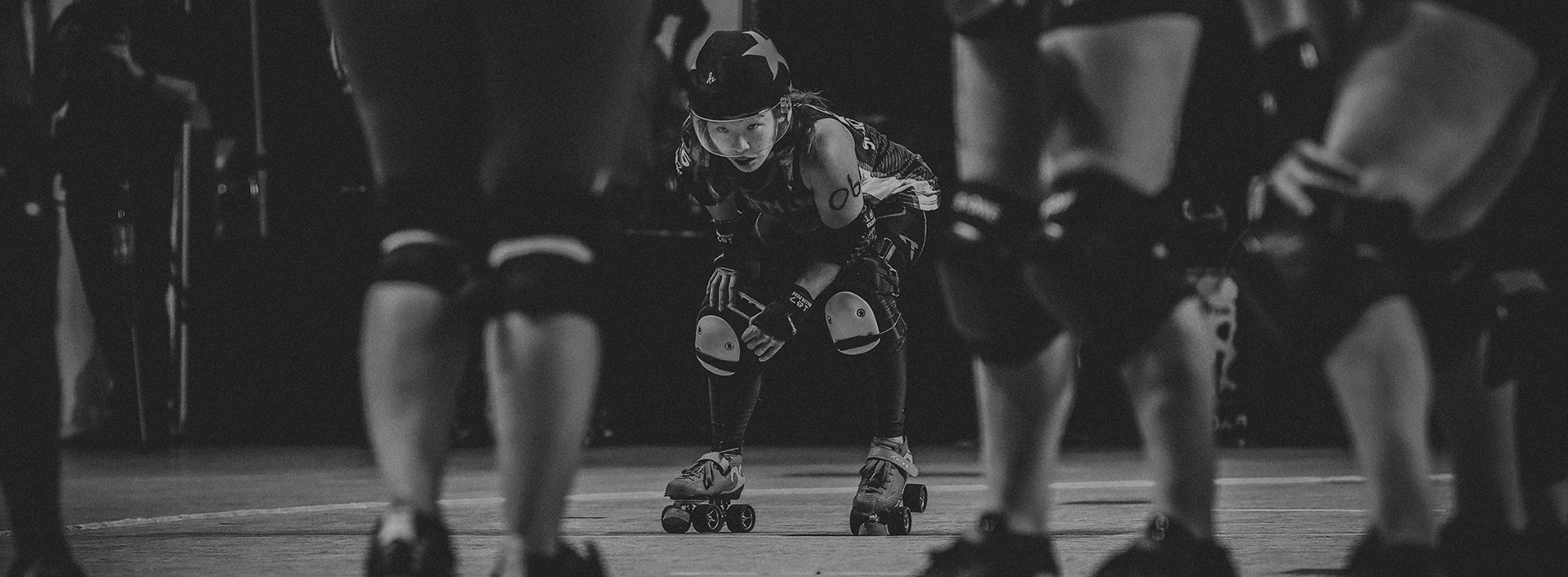
I skated roller derby for nine years, so falling on skates feels natural to me now. That didn’t happen overnight. I couldn’t even skate or fall properly back in 2009. I learned by showing up, falling a lot, and keeping at it.
Commit When You Go
When you decide to try something new, commit fully. Half-committing often causes more falls than just going for it.
Hesitation changes your body position and timing, which can actually make things riskier. When you decide to try, trust your preparation and follow through.
Having someone there can help too. Encouragement, a second set of eyes, or just moral support goes a long way when you’re pushing your comfort zone.
When Fear Still Shows Up
Even with preparation, fear doesn’t always disappear. Sometimes it’s still there when you’re standing at the top or rolling toward something new.
Take a breath. Remind yourself that you’ve trained for this. You know how to fall. You know how to get back up.
You might fall, and that’s okay. Every fall teaches you something. Filming your attempts can also help you see what actually happened instead of what your fear told you would happen.
Roller skating is a long game. It’s about learning, confidence, and enjoying the process. Fear doesn’t mean you’re doing it wrong. Often it means you’re right on the edge of growth.
Sorry, the comment form is closed at this time.